Candy Season Is Already Here: What Dental Professionals Should Know
- caries prevention
- patient education
- Halloween
- candy season
- dental tips
- cariogenic risk
Candy Season Is Already Here: What Dental Professionals Should Know
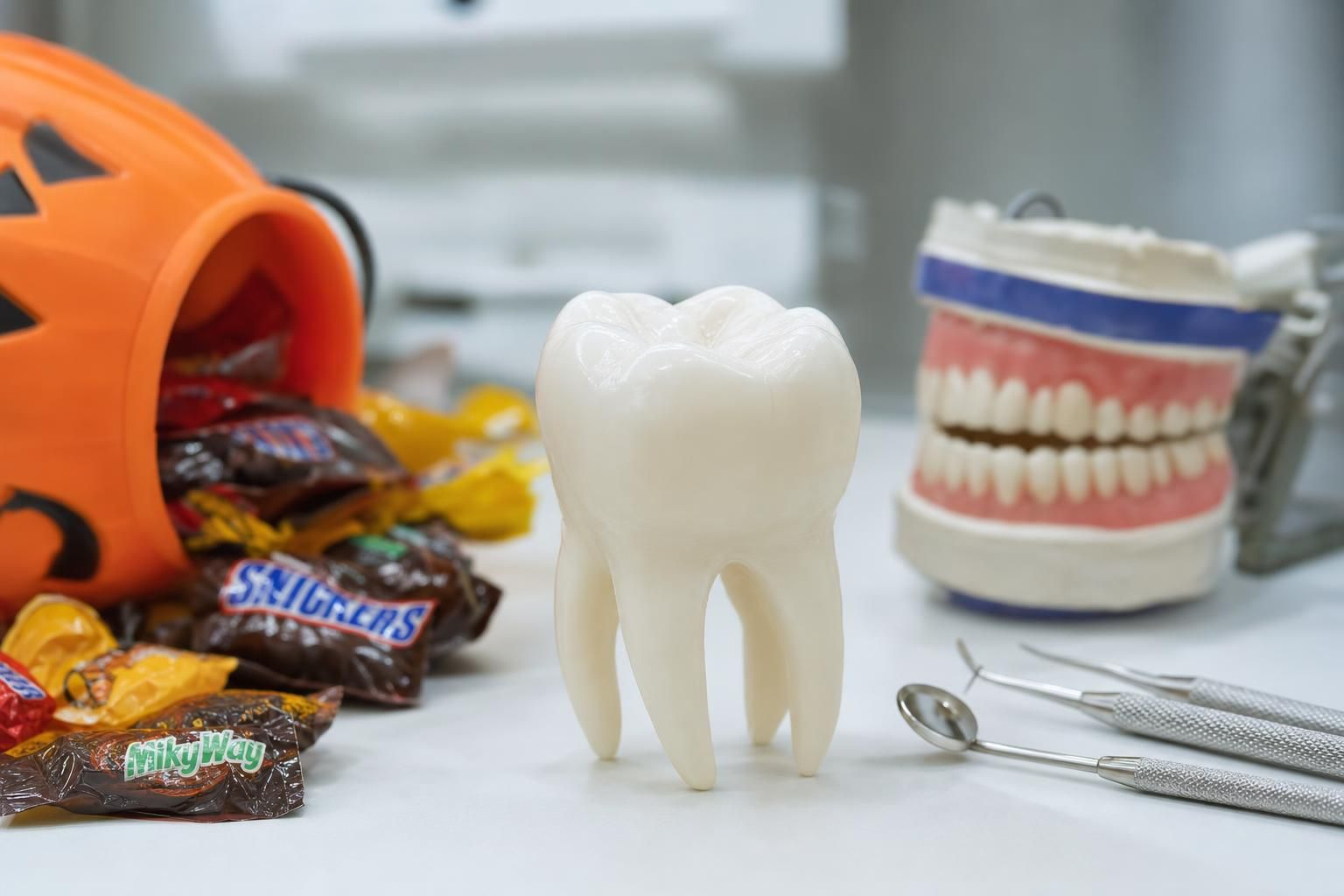
Walk through any major retailer right now and you will find it: bags of miniature chocolate bars, individually wrapped caramels, and chewy gummies stacked floor to ceiling in orange and black packaging. Halloween is still weeks away, yet candy season is already well underway.
For most people, this is a fun seasonal tradition. For dental professionals, it is a clinical prompt. Patients are already buying, already snacking, and already making choices that will show up in their oral health over the coming months. This post is a practical look at the candy landscape from a clinical standpoint, with tips you can use in practice conversations, patient education, and your own preparation for the seasonal surge in caries risk.
Why the Early Rollout Matters Clinically
Retailers begin stocking Halloween candy in late August and early September, which means the window of increased sugar consumption extends well beyond October 31. From a cariogenic standpoint, that extended exposure period is worth taking seriously.
The primary concern is not the quantity of sugar consumed on a single day. It is frequency of exposure. Each time a fermentable carbohydrate is introduced to the oral environment, Streptococcus mutans and other acidogenic bacteria metabolize it and produce acids that lower plaque pH. The remineralization cycle takes time. When patients are snacking on individually wrapped candies throughout the day, across weeks, the enamel simply does not get adequate recovery time.
The early availability of Halloween candy effectively lengthens the high-frequency snacking window, which is a detail worth naming in patient conversations.
Not All Halloween Candy Carries the Same Risk
As dental professionals know well, cariogenicity varies significantly by candy type. A useful framework for patient education groups candy into three rough categories based on oral clearance time and sugar delivery mechanism.
High-Risk: Sticky, Chewy, and Extended-Contact Candies
Candies such as caramels, taffy, gummy bears, fruit chews, and similar products adhere to occlusal surfaces and interproximal spaces. They have long oral clearance times, meaning the fermentable substrate stays in contact with enamel and dentin long after the candy has been chewed. For patients with existing restorations, these candies also pose a mechanical risk, particularly to older amalgam margins, ceramic inlays, or provisional crowns.
From a prosthetics standpoint, patients wearing removable appliances or provisional restorations should be counseled specifically against this category during candy season.
Moderate-Risk: Hard Candies and Lollipops
Hard candies dissolve slowly over several minutes, creating a prolonged low-level acid environment. They are not sticky, but their extended dissolution time keeps salivary pH suppressed. Patients who habitually suck on hard candies throughout the day are in a pattern of nearly continuous acid exposure. Smooth enamel surfaces on anterior teeth tend to show the effects of this habit first.
Lower-Risk: Plain Chocolate
Plain milk or dark chocolate without caramel or nougat fillings clears the oral cavity relatively quickly. It does not adhere to tooth surfaces the way sticky confections do, and its fat content may offer a modest buffer effect. This does not make chocolate a dental health food, but in a season full of suboptimal choices, it is the least problematic option in most Halloween candy assortments. This is a practical point patients often appreciate hearing, because it feels actionable rather than simply restrictive.
Practical Talking Points for Patient Conversations
Your patients do not expect you to tell them to skip Halloween. They do respond well to specific, realistic guidance. These are conversation points that tend to land well in a clinical setting.
Timing matters. Candy consumed with or immediately after a meal is less damaging than candy eaten as a standalone snack, because salivary flow is already elevated and buffering capacity is higher during and after eating. Encouraging patients to batch their candy consumption around mealtimes is a realistic strategy most families can actually follow.
Water is an underused tool. Rinsing with water after eating candy accelerates oral clearance and helps restore pH more quickly. It is not a substitute for brushing, but in practical terms, most patients will not brush after every piece of candy. Water is a realistic middle step.
Brushing timing after acidic exposure. If patients have been consuming acidic candy or candy with high acid content, waiting 30 minutes before brushing gives enamel time to remineralize slightly before mechanical stress is applied. This is a nuanced point that many patients have not heard, and it tends to generate good engagement.
Fluoride toothpaste in the evening. Reinforcing the role of fluoride in remineralization is always appropriate. Patients who are inconsistent with evening brushing are particularly vulnerable during high-sugar seasons. A gentle, non-alarming reminder about brushing before bed, using fluoride toothpaste, keeps the conversation focused on practical behavior rather than fear.
For patients with prosthetics or active restorations. Patients wearing night guards, retainers, or removable prosthetics should be reminded to clean these appliances carefully during candy season. Sticky residue on the fitting surfaces of removable devices can trap fermentable substrate against the tissue or remaining dentition for extended periods.
What the Candy Aisle Can Tell You About Your Schedule
For dental professionals in a clinical practice setting, the appearance of Halloween candy in stores is also a useful scheduling cue. November and December typically bring a modest uptick in patients presenting with new caries, sensitive teeth, or fractured restorations linked to sticky or hard confections.
Anticipating that pattern allows you to think ahead. It may be worth reviewing which patients are overdue for their recall appointments and are in higher-risk categories, including pediatric patients, patients with active caries history, or patients with extensive restorative work. Getting those patients seen before the holiday season is genuinely better for their oral health outcomes.
From a laboratory workflow perspective, this is also a good time to plan for potential increases in fractured restoration cases. Broken cusps from biting into hard candy, dislodged inlays, or damaged provisional restorations are not uncommon in November. Having a clear communication line with your laboratory and a predictable turnaround process in place before the seasonal rush is simply good practice.
A Note on Patient-Facing Materials
Many dental practices prepare seasonal patient education content around Halloween. If your practice does this, the most effective materials tend to focus on specific behaviors rather than general warnings. Telling patients that candy is bad for their teeth is information they already have. Telling them that timing their candy consumption around meals, rinsing with water, and prioritizing chocolate over sticky candies are all small changes they can realistically make tends to produce more engagement and better reception.
Parents of pediatric patients are a particularly receptive audience. Practical, non-alarmist guidance that acknowledges the reality of the holiday while offering specific tools is well aligned with how most parents prefer to approach these conversations with their children.
The Season as a Clinical Opportunity
Candy season, for all the challenges it presents, is one of the more natural openings for patient education in the dental calendar. Patients are already thinking about candy. They are already making decisions. A brief, specific, clinically grounded conversation at a recall appointment during this window can reinforce habits that carry well beyond October.
The goal is not to be the provider who lectures patients about sugar. It is to be the provider who gives them something specific and useful they did not already know. That kind of conversation builds trust, supports long-term oral health, and reflects the clinical depth your patients came to you for in the first place.