What September Means for Dental Practices
- Q4 planning
- dental practice management
- dental laboratory
- prosthetics workflow
- year-end benefits
- clinical scheduling
September Is a Signal, Not Just a Month
Summer schedules tend to be unpredictable. Patients travel, families juggle school transitions, and appointment books often run lighter than the rest of the year. September changes that pattern quickly.
School is back in session, routines are restored, and patients who deferred treatment over the summer begin reaching back out. At the same time, the fourth quarter carries its own momentum: benefits deadlines, holiday scheduling conflicts, and year-end treatment planning decisions all converge between October and December. The practices that handle that stretch well are usually the ones that started preparing for it in September.
This guide walks through what that preparation looks like, practically and clinically.
Why the Fourth Quarter Demands a Different Approach
The final three months of the year tend to concentrate patient volume, treatment complexity, and logistical pressure in ways that the rest of the year does not.
Dental Benefits and the Year-End Window
Many patients carry dental insurance with annual maximums that reset on January 1. For patients who have unused benefits remaining, the fourth quarter is often the point at which they schedule the restorative, prosthetic, or elective work they postponed earlier. That creates a predictable surge in case acceptance and treatment scheduling during October and November.
The practical effect for your practice is that your case pipeline may fill faster than expected, and your laboratory turnaround timelines become a more critical variable. A crown prep completed in late November needs to come back before the holiday schedule disrupts delivery and seating. Planning case submissions and coordinating with your laboratory partner earlier in the month gives both sides more room to work.
Holiday Scheduling Compression
Patients become harder to reach and less reliable about scheduling between Thanksgiving and New Year. Staff availability also shifts. The window between early October and mid-November is genuinely productive clinical time. Cases that miss that window frequently push into January.
Thinking about your schedule in these terms helps prioritize which patients to contact now, which cases to sequence first, and which restorations require the most lead time.
Clinical Planning for the Quarter
Review Open Treatment Plans
September is a good time to work through the treatment plans in your system that were accepted but not yet scheduled. Patients who said yes to a crown, a partial, or an implant restoration earlier in the year may simply need a prompt. Reaching out in September gives them time to schedule before the compression of November and December makes coordination difficult.
This is particularly relevant for multi-appointment cases. Implant restorations, full-arch work, and cases requiring a series of adjustments need enough runway to complete properly. Starting those conversations now prevents the frustrating situation of a patient who wants to finish treatment before year-end but does not have enough time to do so.
Prioritize Cases That Require Laboratory Fabrication
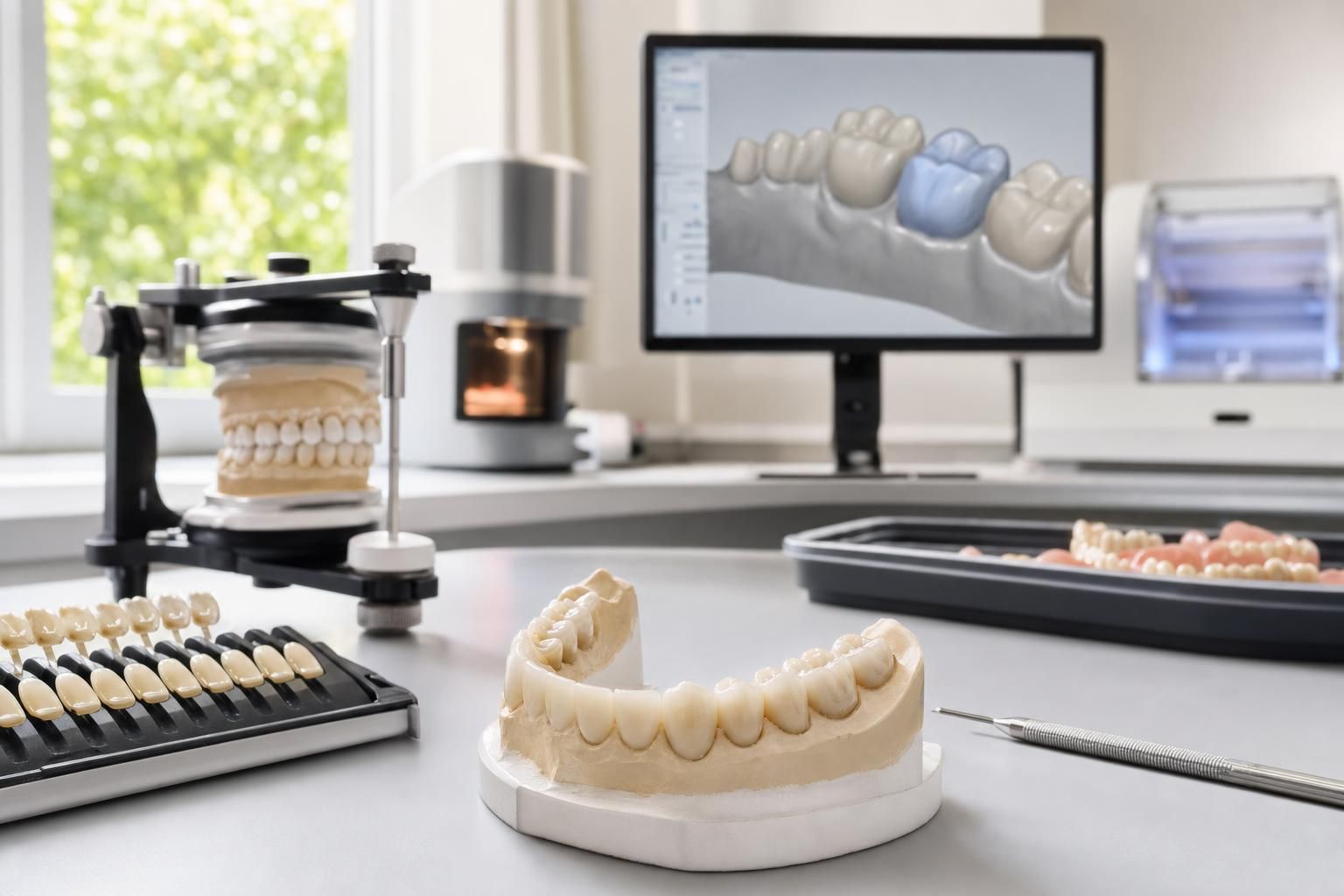
Any restoration that leaves your office and requires fabrication at a dental laboratory carries a turnaround time that belongs in your scheduling logic. Fixed prosthetics, removable appliances, implant-supported restorations, and night guards all require coordination between your clinical workflow and your laboratory's production schedule.
During high-volume periods, laboratories are managing increased case volume from many practices simultaneously. Submitting cases with adequate lead time and complete records, including accurate bite registrations, quality impressions or scans, and clear shade and material specifications, reduces the likelihood of remakes and delays. A case that comes in with everything the laboratory needs moves through efficiently. A case with unclear records creates back-and-forth that costs both sides time.
If you are uncertain about impression technique, bite capture, or material selection for a particular case type, this is a good time to have that conversation with your laboratory. A brief consultation before you prep the tooth is far less costly than a remake after the fact.
Evaluate Your Digital Workflow Readiness
If your practice has been considering digital impression technology or has recently adopted it, the fourth quarter is not the ideal time to work through the learning curve. Practices that have already transitioned tend to move through the fourth quarter more efficiently, with faster case submissions, cleaner records, and fewer impression-related delays.
If you are in the early stages of adopting digital workflows, September is a reasonable time to get questions answered, refine your scanning technique on routine cases, and build confidence before case volume increases. The workflow itself is not complicated, but consistency in technique matters. Having a laboratory partner who can review your scans and provide feedback on fit and accuracy makes that learning process considerably smoother.
Operational Considerations for September
Review Your Supply Inventory
Impression materials, bite registration materials, provisional materials, and laboratory prescription forms are all consumed at higher rates during busy clinical periods. Confirming adequate stock in September avoids the disruption of running short during your highest-volume weeks.
Confirm Laboratory Turnaround Expectations
If you have a working relationship with your dental laboratory, September is a good time to check in on their expected turnaround times for the coming quarter and any cutoff dates they may have around major holidays. Knowing that a crown case submitted on a particular date is likely to return by a particular date lets you schedule your seat appointment with confidence rather than guessing.
For practices within the delivery radius of a laboratory offering courier hand-delivery, that service becomes especially valuable during busy periods. Knowing that cases are being picked up and delivered directly, rather than depending on shipping carriers during high-volume holiday weeks, is a meaningful operational advantage.
Prepare Your Team
Front office staff managing a higher volume of benefit-related questions and scheduling requests benefit from a brief review of how your practice approaches year-end treatment coordination. Clinical staff benefit from knowing which case types are likely to increase so they can prepare accordingly. A short team conversation in September sets clearer expectations than reacting to problems in November.
A Practical September Checklist
The following list is not exhaustive, but it covers the areas where preparation in September most often pays off in the fourth quarter.
- Pull and review open treatment plans from the past six to twelve months
- Contact patients with outstanding restorative or prosthetic treatment plans
- Identify multi-appointment cases that need to begin by October to finish before year-end
- Confirm current laboratory turnaround times and any holiday cutoff dates
- Review impression and bite registration technique for case types you are scheduling at higher volume
- Check material and supply inventory
- Brief your front office on year-end benefits conversations and scheduling priorities
- If you are using or evaluating digital workflows, schedule any technical consultations now
The Advantage of Starting Now
The practices that move through the fourth quarter without friction tend to share one characteristic: they thought about it before it arrived. September offers exactly that opportunity.
Your laboratory partner is part of that preparation. Clean case submissions, clear communication, and adequate lead time are things both sides can plan for. If there are case types you have questions about, materials you want to discuss, or workflow adjustments you have been considering, September is the right time for that conversation.
The quarter ahead is manageable. Starting now makes it more so.